
Getting started
What the platform is made of, and the shortest path from a clone to a running stack.
UseAgent is a multi-package repository with one product UI, one backend control plane, and shared TypeScript packages that define the cross-package contracts. Everything a user sees is a rendering of the backend’s durable event log.
The three moving parts
Frontend
A Next.js UI at port 3400. Chat, agent sessions, skills, playbooks, wiki,
knowledge, memory hub, artifacts, secrets, learnings review, automations,
dashboard, review, apps, and settings. Browser /api/* calls are proxied to
the backend.
Backend
A Hono and Postgres control plane at port 3201. Auth, org scoping, runs,
sandboxes, engines, knowledge, memory, skills, automations, artifacts,
uploads, and connectors.
Shared packages
Runtime-neutral client and harness contracts, artifact renderers, and the deterministic conformance suite that guards them.
How a request travels
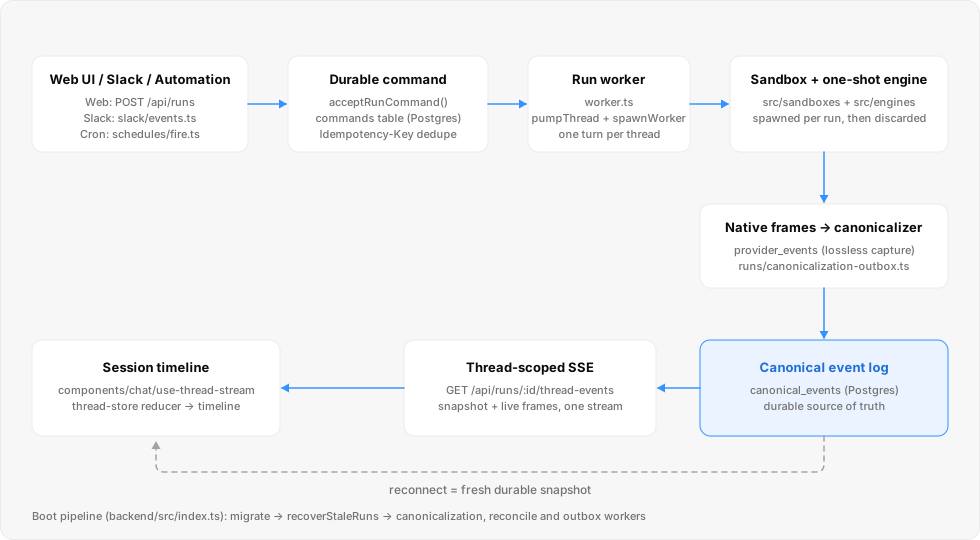
The command-lane round trip: every entry point lands in the same durable command lane, and the UI only ever renders the canonical event log.
A command enters the lane
A prompt from the web app, Slack, or a scheduled automation becomes a durable command with an idempotency key, so retries never duplicate work.
A run executes in a sandbox
The backend claims a sandbox, spawns the engine one-shot, and streams its output into the event log as canonical steps.
The UI renders the log
The session view subscribes to a thread-scoped stream and reduces events into a timeline. Reconnects receive a fresh durable snapshot.
Read Quickstart to run it locally, then Repository map for where each piece lives. The Concepts section defines every term used above.