---
title: Events and streaming
description: Canonical events, native frames, and the two server-sent streams that carry a run to the browser.
sidebar:
order: 3
---
The event log is the product. This page covers what an event is, why there are
two shapes of it, and how events reach the UI.
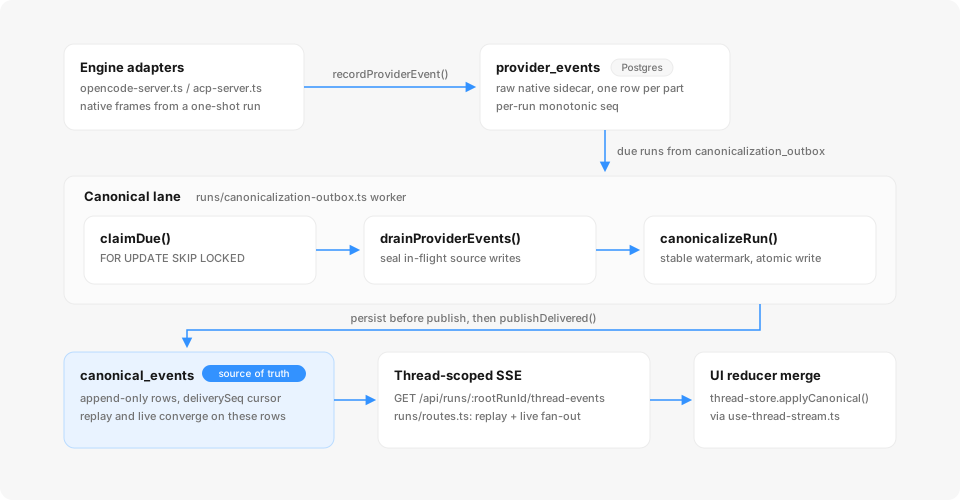
From engine output to the browser: raw provider events are claimed, sealed, and
translated by the canonical lane, persisted to canonical_events, then streamed
per thread and merged by the UI reducer.
## Canonical event
UseAgent's provider-neutral representation of engine output. Canonicalization is
what lets Codex, Claude, and OpenCode render through one UI contract: each
engine's native stream is translated into the same canonical shape, so the
timeline components never need to know which engine produced a run.
## Native frame
The original engine event, retained alongside the canonical one for fidelity and
debugging when the canonical shape cannot yet express every provider detail. The
backend event log and each live provider remain authoritative for persisted and
native runtime state; the shared packages define the public schema on top.
## The two streams
UseAgent uses two distinct server-sent event streams, and it is important not to
conflate them:
A one-way stream scoped to a thread. On reconnect it delivers a fresh durable
snapshot, then live steps. This is how a session view stays current and how
it recovers after a drop without losing history.
A single authenticated org stream that carries live invalidations only. It is
not event replay and not distributed pub/sub; subscribed views refetch their
authoritative APIs after an event arrives.
The thread stream replays missed history from the durable snapshot. The
org-change stream does **not** replay; it only tells ambient views (Automations,
Provider Connections, and similar) that something changed so they can refetch.
## How the UI consumes events
The browser-side [`agent-client`](/architecture/shared-packages) package
reconnects to the thread stream, reduces the event sequence into thread state,
and exposes selectors to the UI. The session grammar then renders each step as a
card or row: work-entry tool groups with folds, reasoning disclosures, recall
receipts, live todo and plan cards, per-file diffs, and artifact cards after the
answer text.
:::tip
A reconnect is not a re-fetch of everything from scratch. The thread stream hands
back a durable snapshot, so a flaky network produces a clean resync rather than a
flash of empty or duplicated content.
:::